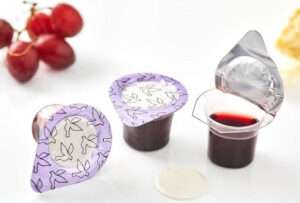

A volunteer had to reach the church early every Sunday before the service just to pour juice into trays and slice bread into hundreds of exact proportions. It used to be a real chore. Fast forward to today, and that same volunteer opens a box and is ready to load a serving tray. They have all the time to get back to the door to greet people. This is one very small shift, but it tells you almost everything about why churches are changing how they serve the Lord’s Supper.
The quiet shift that we never saw
When you walk into most church storage rooms today, you will find fewer trays and far less clutter than you used to see just a decade ago. Congregations are trading multi-step preparation for something much simpler, and that’s ready-to-serve prefilled Communion cups.
Each cup arrives sealed and perfectly proportioned, which means the person responsible for Communion no longer needs to work with a long prep checklist an hour before the doors open.
It’s not cutting corners on something sacred; it’s more about removing the parts of preparation that never added meaning in the first place. Pouring juice into three hundred cups never deepened anyone’s worship. Neither did counting wafers twice to make sure the numbers matched attendance. The reverence of Holy Communion lives in the moment of remembrance and not in the labor beforehand.
Top benefits of shifting to prefilled Communion cups
Less prep, more presence
A leadership team no longer needs to spend its morning preparing the elements. It spends that time praying together and welcoming visitors. They can simply be present before the service starts. Smaller churches are going to feel this the most. The same three or four people often have to handle everything from sound system to greeting to Communion prep. When you remove one task off that list, it frees them to focus more on ministry.
One less thing to worry about
Shared trays and open juice cups often mean dozens of hands touching the same surfaces. Now compare that with sealed Communion cups. The elements remain untouched from the manufacturer until the moment you peel back the seal at your seat, so no one has to wonder who touched the tray before them or whether a cup was washed properly before serving. It’s this peace of mind that matters more to congregations now than it did probably a decade ago, and churches serving older members notice the difference immediately.
A longer shelf life
Traditional Communion elements are going to spoil very fast. Refrigerate the juice. The bread gets stale within days and after everything, all the leftovers usually end up in the trash. So prefilled cups become a really great alternative here. You have sealed packaging that keeps both the wafer and the juice fresh for months. No refrigeration needed. Stock enough for an entire season and never worry about waste on a slow Sunday.
What’s inside a sealed Communion cup

Every cup has two separate compartments for the juice and the wafer. These stay separated until the moment of use.
- A pull-tab foil hermetic seal protects the juice and keeps it fresh until opened.
- A separate seal layer over the wafer compartment keeps the bread untouched.
- A cup-shaped design to sit securely in standard Communion trays. Ushers don’t need special equipment to distribute them.
- Natural and non-GMO ingredients keep the elements simple and true to their purpose.
This design solves a problem older Communion setups never addressed well: keeping the bread and the juice fresh and separate until the congregation is ready to receive them together.
Why this matters for every kind of congregation
The appeal of prefilled Communion cups is not just reserved for Sunday morning convenience.
Ministries that serve people outside the main sanctuary are going to find them just as valuable:
- Hospital and hospice visits, where a chaplain can carry a handful of cups instead of a full Communion kit.
- Homebound members who can’t attend service but still want to share in the Table with someone from their church family.
- Overflow services and holiday crowds, when attendance spikes and traditional prep cannot scale fast enough.
- Small group gatherings held in homes, where nobody wants to bring a tray or a pitcher.
A congregation that serves its members well does not stop at its sanctuary doors. Sealed Communion cups make it incredibly convenient to carry that same experience of remembrance.
Carry the sacrament into a hospital room or a living room without losing any of its meaning.
Making the switch without losing the sacred meaning
Some church leaders worry that convenience is going to cheapen something meant to be treasured. We need to respect that concern rather than dismiss it.
However, know that the shift toward prefilled Communion cups did not come because we want to rush through worship. It came from pastors and elders asking a harder question: does the way we prepare Communion actually serve our people? Or does it just serve tradition for its own sake?
For most congregations, the answer points towards simplicity. Communion elements that arrive ready to serve don’t remove the weight of the moment or the pause before opening a cup and the shared act of remembering together. None of that disappears. What disappears is the burden placed on whoever used to prep everything the night before.

Choosing church supplies that serve your whole ministry
A ministry running well needs much more than just good intentions behind the pulpit. It needs church supplies that are able to hold up week after week and church equipment that does not need constant attention from volunteers who already give enough of their time and effort. Prefilled Communion cups fit into that bigger picture. One part of a supply closet built around serving people, rather than managing logistics.
At AllCommunion, every product on our shelf gets chosen with that same standard in mind. Church supplies need to make ministry easier, not add another task to a Sunday morning checklist. Your congregation gathers fifty people? Or five thousand? The goal is always going to stay the same, and that’s to give your team the tools to spend less time preparing and more time worshipping alongside the people they serve.