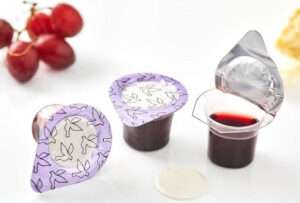

Sunday mornings do have a habit of exposing every gap in your preparation. The worship set ends, and the congregation turns toward the table expecting holy Communion. That’s the wrong moment to discover wafers are stale or the juice ran out last week. No one needs issues like that.
To prevent problems, try a written Communion checklist that frees you to focus on why the church gathers at the table in the first place: to remember Jesus and what He did for us.
Here’s a handy guide from AllCommunion to walk you through what belongs on that checklist:
Why you need a written Communion checklist
Memory can fail
Deacons and worship pastors need to deal with a dozen tasks on any given Sunday. Communion prep competes for the same attention. With a checklist, they’re able to cut down on any guesswork. You put every step on paper before the first person arrives. Nobody needs to rely on remembering what worked last month.
A rushed table pulls focus away
Congregants are surely going to notice when something feels a bit off. Wafers scattered unevenly or a juice pitcher running low mid-row. These are very small details. But they pull attention away from the moment itself. Holy Communion is a celebration of grace, and a prepared table is what lets the people stay fixed on that truth, not on what’s missing.
Consistency builds confidence
Churches rotate volunteers through Communion prep constantly. A Communion checklist gives every volunteer the same clear standard to follow. You need that consistency even more as your congregation grows, as more hands take part in the process each month.
What to include in your Communion checklist
Every church’s list is going to look a bit different depending on size and tradition, but a handful of categories will show up almost everywhere. Here’s a great starting point for you.
- Communion elements: Bread or wafers, plus juice or wine purchased with enough lead time, so check expiration dates.
- Serving pieces: Trays, individual cups or a shared chalice, and bread plates sized for your congregation.
- Table linens: A fitted covering and any embroidered cloths your church uses for the season.
- Storage supplies: Airtight containers to keep unused wafers and a cool, dark space for juice.
- Setup tools: Tray fillers for disposable or prefilled cups, trash bags for disposal, and a cart if the table sits at a distance from the prep area.
- Backup stock: Extra cups and wafers for when the attendance runs higher than expected.
You will want to print this list and pin it in your supply closet. This checklist is only going to work if the people using it can find it fast on a Sunday morning.
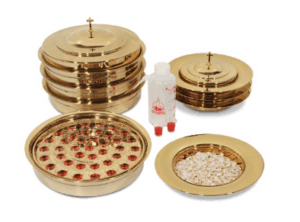
Choosing the right elements for holy Communion
Wafers, bread, or prefilled cups
Some congregations bake their own bread weekly. There are others that prefer the consistency and shelf stability of Communion wafers. These store and travel well. Plus, these do not leave you guessing of when to bake. Churches running larger services often move to prefilled cups that come with wafer and juice together. This cuts down the prep time down to almost nothing on a busy Sunday.
Storing Communion wafers properly
Heat and humidity are going to be the number one enemy. Keep Communion wafers sealed in their original packaging until you plan to use them. So naturally, storing becomes very important. You will need to store that packaging somewhere cool and dry. Keep away from any direct sunlight, and check the expiration date every time you need to restock. This way you can rotate older boxes to the front.
Storing and serving Communion juice
Unopened Communion juice can last you months, but it needs to be stored in a cool pantry. Refrigerate it immediately upon opening, and use the remainder within the week. Buy single-serving bottles or prefilled cups if you want to avoid this problem; a wise choice because nothing goes to waste after the service. If your congregation prepares Communion juice in bulk pitchers, pour only what a single service needs. Make sure you refrigerate the rest right away. Don’t leave it out during setup; it will spoil the juice quickly.
Preparing the Communion table
Setting up with purpose
The Communion table needs to be ready well before the first person walks in, not assembled while the opening song plays. The easiest way is to start with setting out the trays in the order they will be passed. Does your church use candles or a cross as part of the table’s presentation? Place those first so the elements sit naturally around them.
After the service
Cleanup also needs to get the same care as setup. Rinse trays before residue dries. Return unused wafers and juice to storage immediately. This is a five-minute habit, but it protects the next service from starting behind schedule.
Turning this into a repeatable system for church leaders
This checklist can only earn its place if someone actually uses it every time. Build it into your team’s weekly work rhythm. Assign one volunteer as the point person for supply counts, and have them restock a week ahead. Church leaders should treat Communion prep as a standing responsibility, rather than an afterthought.
Over time, this system starts becoming second nature. New volunteers step into a process that already works, and the table stays ready for whatever the season brings.

Building a reliable Communion checklist always starts with the right sourcing of elements. We here at AllCommunion stock everything your congregation needs, so restocking never becomes the thing that slows your team down. When the supply side runs extra smoothly, your church can put its full attention on the Lord’s Supper.