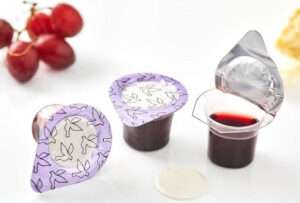

Communion is perhaps one of the most meaningful moments in the life of a church. An act of worship that points believers back to the cross. The elements used during Communion carry deep meaning; the juice and the bread.
Many churches today serve small wafers and not pieces of a loaf. Why? Did the early church use wafers? Does the Bible require them? Or are they just convenient?
The answer is in centuries of church practice and practical wisdom. The Bible tells us that Jesus had bread during the Last Supper. Nothing specific. Churches have utilized different approaches over time, but the most common? Many churches continue using Communion wafers, and it’s because they believe it supports the purpose of the Lord’s Supper faithfully.
What bread did Jesus use at the Last Supper?
Jesus shared the Last Supper during Passover. Jewish families ate unleavened bread during that meal in remembrance of Israel’s hurried departure from Egypt.
Because there was no time for the dough to rise, no yeast was used to make the bread prepared for Passover. The Bible also uses leaven as a picture of sin and corruption in several passages. Unleavened bread became a fitting reminder of Christ’s sinless life.
Jesus broke the bread and connected the Passover meal to the New Covenant established through His sacrifice. Communion continues that remembrance today. Believers proclaim the Lord’s death until He returns.
Why did churches begin using wafers?
The earliest Christians often used ordinary bread during Communion. Practices gradually developed to meet both theological understanding and practical needs of larger congregations as churches grew across Europe.
By the early Middle Ages, many Western churches had begun using thin wheat wafers made only from flour and water. Church leaders saw these wafers as a clear connection to the unleavened bread of Passover..
Today we see the use of Communion wafers has become quite prevalent. Congregations continued using wafers because they remained faithful to biblical symbolism. Plus, they were very efficient for larger services too.
Why many churches continue using wafers today

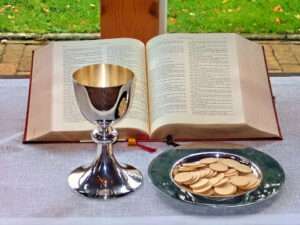
They reflect the Passover background
Many churches see wafers as a visual reminder of that historic event because Passover bread was unleavened. We cannot reproduce the exact appearance of the bread Jesus used, but the wafers still preserve the connection to the biblical account.
They keep the focus on Christ
Communion is never about the bread itself. It is about remembering Jesus. A simple wafer avoids drawing attention to appearance or presentation. Instead, it quietly directs the congregation toward Christ’s sacrifice and His resurrection. It directs attention to the hope believers have through Him.
They serve large congregations well
Many churches welcome hundreds or even thousands of people every week. Serving fresh bread to every person is going to take significant preparation. Thin wafers allow volunteers to distribute Communion smoothly without unnecessary delays and helps the church remain focused on worship.
Practical benefits that support worship
They produce fewer crumbs
Many believers treat Communion with deep reverence. It reminds them of Christ’s sacrifice. Small wafers are usually going to leave very few crumbs. Cleaning up afterwards becomes easier.
They stay fresh much longer
Fresh bread has a very short shelf life, and so becomes impractical for the long term. Wafers have very little moisture in them. They remain shelf-stable for long periods when stored properly. Churches can prepare confidently without worrying if bread will spoil before the next Communion service.
Sacrament supplies become so much easier to manage throughout the year.
They create consistency
Each person gets the same portion when you are using uniform wafers. Reliable sacrament supplies help ministry teams focus on serving people with the right intentions.
What matters most during Communion?
Faith comes before the elements
Scripture calls us all to peek into our hearts before receiving Communion (1 Corinthians 11:28). The shape of the bread has nothing to do with the spiritual significance of Communion. But our response to Christ does. Believers come with gratitude because Jesus paid the price for sin once and for all. Communion gives the church an opportunity to remember His finished work together.
The church gathers as one body
Communion reminds us that we belong to one family in Christ. Every person approaches the Lord’s Table through the same grace. It is that shared remembrance that strengthens the fellowship of the church. It points everyone back to the gospel.
Simple elements have deep meaning
It’s surprising how God often uses some of the most ordinary things to remind us of the extraordinary truth. A small wafer is insignificant, yet something this small directs our attention to the body of Christ given for us during the observance of Communion. The power rests in the Savior they proclaim.

Choosing Communion supplies with care
We at AllCommunion know church leaders are often going to spend significant time preparing sermons and planning worship. With dependable church products, they can prepare Communion with confidence. Quality church products support the orderly serving of Communion, helping volunteers to minister most effectively.
Many churches also choose dependable sacrament supplies because consistency helps every Communion service remain focused on worship and not on the prep beforehand. Reliable church products become part of good stewardship. Among today’s church essentials, Communion supplies remain one of the most regularly used resources because they help churches faithfully celebrate the Lord’s Supper throughout the year.
Wrapping up
None of the church traditions command churches to use wafers and not bread. Scripture tells us to remember the Lord. Remember the Lord as we share Communion. Many churches love Communion wafers because they reflect the Passover setting of the Last Supper and preserve centuries of Christian practice. Plus, it’s very practical for serving large congregations.
The outward form may differ from one congregation to another, but it is the purpose that never changes.