

The Communion table at the front of your sanctuary makes a statement every Sunday, before a single word is spoken. It communicates the theology and identity of your congregation, built around this sacred practice, so you need to get the style right. Get it right and the table integrates into the room the way good design should. Get it wrong, and it creates a visual tension your congregation feels.
The decision between traditional and modern altar design reflects genuine theological convictions. It also reflects the worship culture your congregation has cultivated over the years of gathering together. AllCommunion.com offers this guide to help you choose.
Traditional design concepts
The visual language of permanence
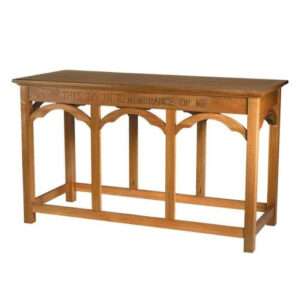
Traditional Communion tables carry carved panel details and finish tones like dark walnut or deep cherry that communicate permanence and rootedness. These design choices developed over centuries of church furniture tradition that understood wood craftsmanship as an act of reverence.
A traditional Communion table in a historic sanctuary with original woodwork and stained glass speaks the same visual language as the room around it. The table belongs there. It looks as though it was made for that specific space.
Altar styles in the traditional category all carry inscriptions more naturally than contemporary pieces. Carved lettering and hand-lettered inscriptions integrate with traditional woodwork in ways that feel very organic.
Where traditional design struggles
A traditional Communion table placed in a contemporary sanctuary creates visual conflict that no amount of styling can recover. With too many details and dark finish tones, the table draws attention to itself, but not the right kind of attention.
Traditional pieces are also costly in most markets because the craftsmanship to produce them is more labor-intensive. A congregation whose worship culture is thoroughly contemporary, paying a premium for a traditional design serves neither their aesthetic nor their budget well.
Modern design concepts
Simplicity as theological intention
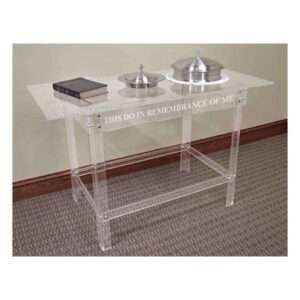
A modern altar design communicates that the elements on the table carry the symbolic weight, not the surface supporting them. Minimal ornamentation and natural wood tones with precise proportions direct attention toward the bread and the cup. Not the table itself.
Altar styles in the contemporary category often come with floating designs and wood types like white oak or walnut in clear or lightly tinted finishes that complement the projected background, without competing with screen content. In a room designed around visual media and contemporary architectural elements, a modern Communion table integrates perfectly well.
The risk of trend-driven purchasing
Contemporary altar styles carry a risk. They can date. A design that feels current this year may read as outdated in a few years. A congregation purchasing a modern altar will need to evaluate whether the design reflects a genuinely timeless contemporary aesthetic, or if it is a trend-specific moment that will start to feel out of place soon.
Brand authenticity matters here in a very practical sense. A supplier like AllCommunion.com, whose contemporary designs are built around enduring proportions and quality materials, produces pieces that hold up aesthetically over time.
Transitional designs
When neither extreme fits
Many congregations sit genuinely between traditional and contemporary worship cultures. A strictly traditional or strictly contemporary Communion table serves part of that community and creates friction with the rest.
Transitional altar styles are well suited here. These offer simple profiles without the stark minimalism of fully contemporary pieces, and classic proportions without the ornate detailing of traditional ones. A transitional table in white oak with clean panel detail and a medium-tone natural finish coordinates with the broadest range of existing sanctuary furniture and reads as appropriate to the widest range of congregation cultures.
Matching style to your specific worship environment
Read your architecture first
Walk your sanctuary and identify the dominant architectural language. Your Communion table needs to coordinate with that language. A sanctuary with exposed timber beams and natural stone calls for a table with organic warmth. A sanctuary with white drywall and polished concrete floors calls for a table with precision and restraint.
Brand storytelling and supplier transparency
Brand storytelling in the church furniture market sometimes substitutes aspirational photography for honest specification. A supplier who photographs a contemporary table in a beautifully lit studio creates an impression that may not survive contact with your specific sanctuary lighting or existing furniture.
An authentic brand in the liturgical furniture space, like AllCommunion.com will show you honest photographs of their pieces in real church environments, and also provides references from congregations whose sanctuary environments resemble yours.
The questions that lead to the right decision
Who is the table for?
Brand authenticity in your own decision-making process means answering this question very honestly. The Communion table you choose serves your congregation. So you will need to choose a style that serves the specific people in that specific room.A congregation of mostly older members in a traditional sanctuary is going to benefit from a table that honors the worship culture. A congregation of young adults in a renovated space benefits from a table that speaks their aesthetic language. Both of these decisions reflect the genuine pastoral care for the community being served.
Evaluate longevity alongside style
Every alter style decision carries a longevity dimension. A traditional Communion table in quality hardwood, built to commercial specs, serves a congregation for decades to come. A contemporary table built from trend-specific materials and finishes may need replacement sooner than that. Factor the lifespan difference into your cost evaluation.
AllCommunion.com knows your Communion table holds the most theologically significant elements your congregation handles in worship. The style you choose for it needs to reflect honest discernment about your congregation’s identity and the worship culture God has cultivated in your specific community.
Traditional or modern, or something in between. The right answer is the one chosen with that kind of intentionality.