

Communion Table Care Guide: How to Keep It Looking New
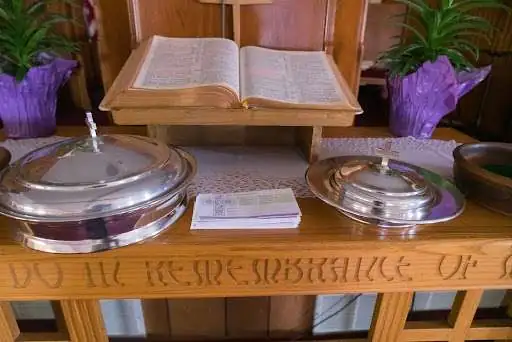
Your Communion table sits at the front of your sanctuary every Sunday and every person who walks through your doors sees it. It holds the elements of the Lord’s Supper and anchors your platform visually. A neglected Communion table communicates disregard and looks bad over time, and you don’t want that for your congregation. Most churches invest real money in a quality Communion table and then give almost zero thought to Communion table pros and cons, or to maintaining it once acquired.. The result is a table that looks five years older than it is, within three years of purchase. A straightforward care routine prevents issues, and it costs almost nothing compared to replacement costs. This guide from allcommunion.com will help! Know what your table is made of The finish type This will determine everything because applying the wrong cleaning product to the wrong finish causes more damage to the communion table than years of normal use ever would. Different types of finishes will need completely different care approaches and most of them are not going to be compatible with each other. Contact your supplier to know what finish was applied. This will help you make the right pick. If you purchased a DIY church furniture or inherited a table with no documentation, test any cleaning product on an inconspicuous area before applying it to a visible surface. Solid wood versus veneered construction Communion table pros and cons between solid wood and veneered construction definitely affects care requirements directly. Solid wood tolerates light sanding and refinishing when surface damage accumulates. Veneer will not. The decorative layer runs only a millimeter or two thick. So aggressive cleaning is not suggested because moisture exposure will lift and bubble it permanently. Use only dry or barely damp cloths for cleaning if your table is veneered. Never let water sit on a veneered surface. Address spills immediately and dry the surface completely within seconds of any moisture contact. Weekly cleaning What to use A dry microfiber cloth handles the dust and surface residue that weekly communion service deposits on your table. Microfiber lifts particles from the finish surface without causing any scratches. Try using a barely damped cloth to wipe off the dirt for slightly more substantial cleaning. Use a dry cloth immediately to wipe off any excess moisture. This should work with most finish types. Do note that the keyword here is barely damp. You don’t want any excess moisture sitting on a wood surface. Over time, it will cause swelling and cloud out certain features. What to avoid Do not use spray furniture polish products that have silicone in them. Silicone polishes create a temporary shine, but they also come along with a long-term problem. They penetrate the finish over repeated application and make future refinishing nearly impossible by preventing new finish from bonding properly. Your DIY church furniture care routine should never include silicone-based products on any piece you might want to refinish later. Communion elements and surface protection Wine and grape juice are among the most damaging substances a wood finish encounters. Their acidity attacks certain finish types quickly when left to sit. Wipe the table surface immediately and completely after every Communion service. Do not leave damp Communion linens lying on the table surface after the service ends. Altar table styling choices that include candles will also come with the added risk of wax drip. You will need good candle holders with wax drip protectors to help. Allow the wax to harden completely and then lift it gently with the plastic card. Never use a metal scraper on a wood finish. Annual conditioning for oil-finished tables Tables finished with penetrating oil finishes benefit from annual reconditioning with a compatible oil product. The finish dries out over time as the oil oxidizes. It leaves the wood surface looking dull and feeling slightly rough. A light application of the appropriate oil, wiped on and buffed off after the recommended penetration time, is going to restore the finish’s depth and protective qualities, without the cost or disruption of professional refinishing. Communion table pros and cons in the finish category include this maintenance requirement as a genuine consideration. Oil finishes are beautiful and repairable, but they do need periodic attention. Addressing damage before it spreads Minor scratches and surface marks Surface scratches in most finish types respond to touch-up products matched to your specific finish. Finish pens and touch-up markers in matching wood tones handle minor scratches without needing professional intervention. DIY Communion table touch-up work is entirely manageable for a careful volunteer, provided they use the right products. The mistakes that need professional correction almost always come from using the wrong product with good intentions rather than from the original damage. Water rings and finish cloudiness White rings and cloudy patches in a finish typically indicate moisture trapped below the finish surface. A light application of finish restorer will often dissolve white rings without refinishing for lacquer and shellac finishes. For catalyzed finishes, these marks are harder to address; they will need professional attention. Communion table pros and cons in care complexity point consistently towards catalyzed finishes for congregations without a dedicated facilities professional. They are able to resist damage more effectively than softer finishes, even though they are much harder to repair when damage does occur. Care with compassion Altar table styling choices contribute to the worship ideals that frame your Communion elements beautifully. Your Communion table holds the most significant items your congregation handles in worship. The care you give it reflects the same intentionality you bring to the service itself and a table that looks well-tended tells every person in the room that someone here takes the things of God seriously. That testimony costs nothing but a microfiber cloth and thirty minutes a week. We here at AllCommunion.com can help you pick just the right table for your sanctuary as well as bulk ordering of communion supplies, linens and Communion ware.
Common Questions People Ask About Communion
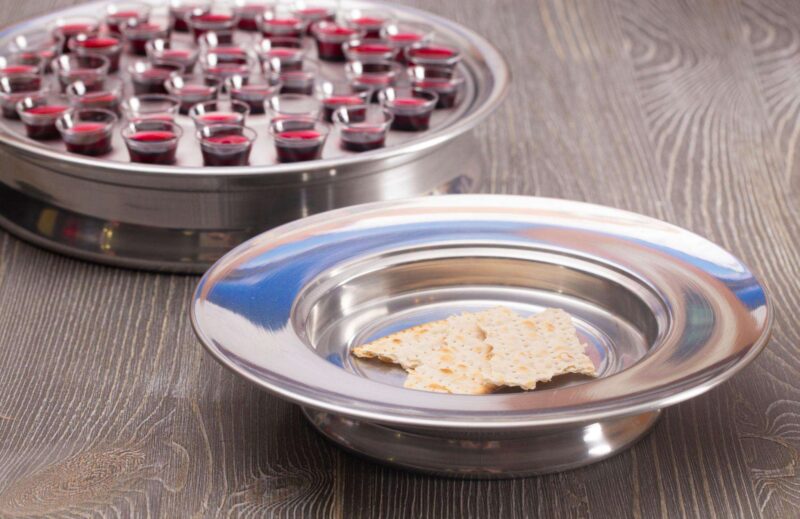
Communion is one of the most recognized practices in Christianity, yet it’s also one of the most commonly misunderstood. Whether someone is new to church, returning after many years, or simply curious about the Lord’s Supper, there are certain questions that often come up. Protestant churches may differ in some of their traditions, but they generally share the belief that Communion is a meaningful act of remembrance centered on Jesus Christ and the price He paid for our sins. Below are some of the most common questions people ask about Communion and the answers many Protestant churches provide. What Is Communion? Communion, sometimes called the Lord’s Supper, is a practice Jesus established with His disciples before His crucifixion. During that meal, He used bread and a cup to symbolize His body and blood, instructing His followers to continue the practice in remembrance of Him. For Protestants, Communion serves as a reminder of Christ’s sacrifice and God’s grace. It is not simply a tradition or ritual. It is an opportunity for believers to pause, reflect, give thanks, and remember the foundation of their faith. Why Do Christians Take Communion? One of the most searched questions about Communion is why Christians continue to observe it today. The answer is rooted in Jesus’ own instructions. Communion helps believers remember Christ’s death, celebrate the forgiveness made possible through His sacrifice, and reflect on their relationship with God. Communion also reminds believers that they are part of a larger body of faith. While it has personal significance, it is also a shared act of worship that brings the church together. Whether celebrated in a large sanctuary or a small gathering, the purpose remains the same. How Often Should Communion Be Served? Churches differ on this question. Some Protestant congregations serve Communion every week, while others observe it monthly, quarterly, or during special services such as Easter and Christmas. Scripture does not prescribe a specific schedule, which gives churches flexibility. What matters most is not the frequency itself but the intentionality behind the practice. Whether Communion is observed weekly or occasionally, it should remain meaningful and focused on Christ. For churches seeking practical ways to prepare for regular Communion services, resources available at All Communion can help simplify planning and preparation while keeping the focus on worship. Who Can Participate in Communion? This is another question many people ask, especially visitors attending a church for the first time. Practices vary among Protestant churches, but many welcome all believers in Jesus Christ to participate in Communion. Some congregations provide a brief explanation before Communion begins so guests understand the church’s practice. Others encourage participants to reflect prayerfully before partaking. Because traditions differ, it is always helpful to listen to the guidance provided by the local church. What Elements Are Used During Communion? The bread and cup are the traditional elements used during Communion. Depending on the church, the bread may be wafers, unleavened bread, or small pieces of loaf bread. The cup is commonly filled with grape juice in many Protestant churches, although practices vary. Churches today have several options available depending on their size and needs. Some use traditional Communion trays along with sacramental grape juice and altar bread. Others prefer convenient solutions such as Kingdom Prefilled Communion Cups & Wafers, particularly when serving larger congregations. Products like sacramental grape juice, traditional altar bread, disposable Communion cups, and stackable Communion trays are commonly used by churches and are available through All Communion, helping ministries choose the approach that best fits their worship setting. Can Communion Be Taken at Home? The growth of small groups, home Bible studies, and family worship gatherings has led many people to ask whether Communion can be shared outside of a church building. Many Protestant churches believe that, unless a particular tradition teaches otherwise, believers may share Communion in home settings when it is approached with understanding and reverence. During seasons when gathering in person becomes difficult, home Communion has often helped believers stay connected to this important practice. What Should Someone Think About During Communion? Communion provides an opportunity to slow down and reflect. Many believers use the time to remember Christ’s sacrifice, express gratitude, pray, and examine their relationship with God. Some people focus on specific Scripture passages. Others spend a few moments in silent prayer. There is no single formula. The goal is simply to approach Communion with sincerity and a desire to remember what Christ has done. Communion Remains a Meaningful Practice Questions about Communion are natural. In fact, they often reflect a desire to understand the faith more deeply. While traditions may vary among Protestant churches, the central purpose of Communion remains consistent: remembering Christ, celebrating His grace, and sharing in worship with fellow believers. Whether someone is taking Communion for the first time or has participated for decades, the Lord’s Supper continues to offer an opportunity for reflection, gratitude, and renewed focus on the gospel. The questions may change from person to person, but the significance of Communion remains remarkably enduring.
Best Wood Types for Durable Communion Tables (Oak, Maple, and More)
The wood from which your Communion table is constructed determines everything in your ownership that follows. It determines whether it still looks dignified twenty years from now or requires replacement in five. Most congregations spend more time choosing the table’s appearance than its material, which is exactly the wrong order of priorities. A Communion table built from the right wood type serves your congregation for generations. Once built from the wrong material, or even the correct material but dried and finished poorly is going to deteriorate faster than anyone expected and costs the church more in the long run than a quality option would have. Here is an honest look from allcommunion.com at the wood types that actually earn their place in a Communion table. What makes wood suitable for a Communion table Hardness and density Wood hardness determines how well a particular wood resists denting and surface compression that weekly ministry use creates. The Janka hardness scale measures this. Higher Janka ratings mean harder wood. For a modern altar place that sees weekly use across decades, hardness matters. Softwoods like pine or cedar score low on the Janka scale. So they will dent under normal use. Hardwoods like oak or maple resist that type of damage and maintain their surface integrity across the long ministry lifespan a Communion table requires. Stability and moisture exposure All wood moves with seasonal humidity changes. Wood types differ significantly in how much they move and how predictably they do so. A stable wood is going to be much better at holding its joints and maintaining its finish over years of seasonal cycling. Communion table wood specified for stability handles heating and cooling cycles much better in most sanctuaries without any structural consequence. Oak Red oak and white oak Oak dominates church furniture production, and with good reason. Oak is hard and is widely available. Plus, it also stains beautifully. Oak has an established track record in ecclesiastical settings that spans centuries. For altar styles, oak performs equally well across the full range. Red oak has a slightly more open grain structure than white oak. This means it accepts wood-stain faster and displays a more dramatic grain figure under finish. White oak has a tighter grain and slightly cooler tone that suits contemporary altar styles well. White oak also carries natural tannins that make it resistant to moisture and biological deterioration. White oak in either a clear or lightly tinted finish represents the most balanced combination of performance and appearance available at its price point for a custom Communion table built to last across a generation of ministry. Maple Hard maple’s performance characteristics Maple wood table construction offers the highest hardness rating of any commonly available domestic species used in furniture. It is harder than oak or cherry. It’s even harder than walnut. Hard maple is able to resist surface damage exceptionally well. This makes it ideal for a modern altar in a high-traffic environment. Maple’s tight, consistent grain structure offers a smooth surface under finish, well-suited to contemporary and transitional altar styles where clean, uninterrupted surfaces carry the design. Maple wood accepts paint and opaque finishes beautifully as well, thus it becomes the right substrate for custom Communion table pieces designed to be painted or finished in a color rather than a traditional wood strain. The tradeoff is that hard maple resists penetrating stains. This can lead to blotchy and uneven results sometimes. Cherry Character that improves with age Cherry holds a very specific place in American furniture tradition. A tradition that extends naturally into church settings. Fresh cherry wood runs a pale pinkish-brown. It darkens to a rich reddish-brown through a natural oxidation process. A cherry Communion table develops a patina over the years of use that makes it look more valuable. Communion table wood in cherry suits traditional and transitional sanctuaries. The tradeoff is, because cherry wood is softer than maple and slightly softer than oak, cherry accumulates surface marks more readily in high-contact areas. Walnut Dark tone and visual authority Walnut has the darkest natural tone of any commonly used domestic hardwood. It is that darkness that gives a walnut modern altar a visual authority. Lighter-toned woods are not able to replicate this. A walnut Communion table creates a focal point that draws the eyes deliberately in a contemporary sanctuary with light walls. Durable wood types for Communion tables will rarely include walnut at the top of the hardness chart. But walnut’s dimensional stability and its natural oils make it resistant to environmental stress. Altar style in contemporary and transitional church design increasingly features walnut as the statement material. For a congregation investing in a Communion table that anchors a carefully designed platform environment, walnut justifies its premium price point through both performance and visual contribution. Species to approach with caution Pine and softwood alternatives You find pine in Communion table production sometimes because it is inexpensive. Plus, you find this type of wood everywhere. It has got all the good qualities you need, but its softness is something to look out for. Under weekly ministry use, it dents at contact points and begins to show wear in high-contact areas faster. For a modern altar piece built to serve durably across a decade or more, pine is the wrong choice, regardless of the price advantage you are getting. Exotic hardwoods Exotic wood types appear occasionally in altar styles targeting a distinctive visual statement. Some perform well. Others bring challenges. More practically, exotic types can be very difficult to match for repairs. This is a significant consideration for a Communion table that might need a matching lectern or flanking furniture added later. We here at AllCommunion.com knows that your Communion table’s wood type is a decision made once and lived with for a generation. You will need to choose a wood matched honestly to your sanctuary’s aesthetic. A Communion table built from the right wood and maintained with basic care serves your congregation’s worship for decades. Exactly the kind of
Wood vs Acrylic Communion Tables: What’s the Real Difference?
That table at the front of your sanctuary carries weight every Sunday. Not just the bread and the cup, but the moment itself. So when your church starts talking about replacing or upgrading it, the conversation usually lands on two of the most common options out there. Wood or acrylic. Both show up very consistently in church stage furniture trends, and both have real advocates. However, each one is here to serve different rooms and different visions for what that space needs to feel like. Here is what actually separates them. The case for wood Wood has been the default choice for centuries, and not by accident. There is a reason elders and pastors instinctively trust it. A solid wood altar table carries a sense of permanence. It does not need explanation. It communicates the moment someone walks through the doors that this space holds spiritual significance. Solid hardwoods like oak and maple are able to hold up over decades. They don’t scratch the same way as softer materials do, and any surface damage that does happen can often be repaired and refinished. You will not need to replace them entirely; that matters for churches thinking long-term. If your sanctuary has got a specific aesthetic, wood can easily adapt to it. So what is the drawback? Weight and cost. A well-built hardwood table isn’t something two volunteers easily move between services. Also, if you are working with a tight budget situation, hardwood Communion tables often sit outside what smaller congregations can comfortably spend. Pricing is going to vary significantly based on wood type. It will also depend on whether any carving or detailing is involved. The case for acrylic Acrylic Communion tables entered sanctuaries as stage lighting became more and more sophisticated. The main point is the transparency. When your production team is working with LED uplighting or stage washes, an acrylic table becomes part of the visual environment. For churches that have invested very heavily in their stage design and see their worship environment as a ministry tool in itself, it matters. Light passes through the material, and the result you get is a stage that feels open and contemporary. Acrylic is also notably lighter than hardwood. That portability is genuinely useful for churches running multiple services with different stage configurations or multi-purpose sanctuaries. Where acrylic earns its premium Communion table label is in fabrication quality. Lower-grade options are prone to scratches and hazes over time. High-quality acrylic will not have those issues, as they bring cleaner lines and better clarity for daily use. The quality does come at a similar or higher price point as wood, and maintenance expectations may be higher than most congregations anticipate going in. Breaking down the cost honestly Any honest Communion table cost comparison needs to start with a simple acknowledgement: pricing in this category swings wide. On the wood side, a mass-produced pine Communion table might run a few hundred dollars. Alternatively, a hand-built oak table with hand-carved detailing could push well past a thousand. The price point and quality gap between those two products is going to be significant. On the acrylic side, entry-level pieces are available at comparable price points to budget wood options, but they tend to show their limitations quickly. Quality acrylic construction is genuinely high-end church furniture, priced accordingly. Solid wood in a simpler construction typically delivers more longevity per dollar than budget-tier acrylic if your congregation is navigating real budget constraints and needs a budget Communion table that still honors the space. The wood will age gracefully. Budget acrylic, unfortunately, tends to show its age in ways that feel more like neglect than character. Quality acrylic materials last much longer and keep its beauty far longer than its budget counterparts. The decision shifts towards a vision for churches with more flexibility. Church stage furniture trends to watch out for Current church stage furniture trends reflect a broader tension in church design between the warm and the contemporary. Many congregations are choosing a middle ground by combining natural materials with modern silhouettes. Full acrylic setups peaked in popularity during a period when production value was the dominant conversation in church design circles. That conversation has not disappeared, but there is a visible counter-movement. Congregations are now returning to materials that feel more grounded, more historically connected to what the table represents. That said, acrylic is not going anywhere. For church plants and contemporary congregations, where the visual environment is central to how they express worship, it remains a very serious and legitimate option. What actually drives the decision Three questions tend to clarify the decision faster than any product comparison beyond material and price. What does this table need to do physically? Weight is going to be a real operational factor if your team needs to relocate the table frequently. In a multi-purpose room, for example, the Communion table and pulpit may need to be moved aside. Acrylic is far lighter in most cases than wood. If the Communion table is stationary, and the sanctuary is more traditional, wood may be your best choice. What does your stage lighting look like? If your production setup involves significant color and movement in your lighting, acrylic is going to be a better choice. Wood will integrate more naturally if your lighting is warmer and more static. What does your congregation expect to see at the front of the room? The table is obviously present during Communion, and Communion is one of the most significant acts of worship a congregation shares together. What that table looks like communicates something about how your church understands the sacrament. A budget Communion table can absolutely still serve that moment well. A premium Communion table does not automatically serve it better. The material is one factor. Your church’s observance is another. Making the right call Wood and acrylic are not competing for the same congregation. They are serving different rooms. They are serving different aesthetics. Neither is inherently more reverent.
How to Choose the Right Size Communion Table for Your Church

pastor’s ability to move freely during the most significant moments of a service. A table that disappears against the scale of a large sanctuary fails to anchor the room visually and communicates a lack of planning in the space where your congregation focuses most consistently. Many congregations get it completely wrong because they shop before they measure the sanctuary. It can be a huge problem in the long run, and costly for your congregation. This altar table guide from AllCommunion.com walks through every dimension decision your leadership team needs to make before placing an order. Measure your platform Width It is your platform’s width that sets the outer boundary of your Communion table’s dimensions, of course. A general rule that holds across most sanctuaries runs at roughly one-third of your usable platform width. A platform spanning fifteen feet accommodates a table in the four-to-five foot range comfortably. Push beyond that proportion, and the table starts consuming the platform rather than anchoring it. Measure your platform width accurately. Not the full stage width, but the central zone where your table will actually sit. Mark the proposed table width with tape on the platform floor and stand in the congregation’s seating area to evaluate the proportions visually. What looks right on paper often reads differently from the seats. Depth and clearance Table depth determines how much platform space the table occupies between the congregation and your pastor’s primary speaking position. Most Communion tables run between sixteen and twenty-four inches deep. A minimum clearance of three feet between the front edge of the table and the front edge of the platform is going to give your pastor and worship leaders room to move without creating the impression that the table is a barrier. Your church sanctuary planning needs to treat that clearance as a non-negotiable minimum rather than a target. Height Standard versus custom height Standard Communion table height runs between thirty and thirty six inches. This is the same general range as a dining table. That standard works for most church sanctuary environments. The table reads at a comfortable, dignified height that neither crouches beneath the platform’s visual weight nor towers above it. Your altar table guide for height specification needs to include a sightline test. Sit in the back row of your congregation at service conditions and evaluate where your eyes naturally fall on the platform. Your communion table’s top surface needs to sit within that natural sightline. ADA and accessibility considerations A Communion table used in a tradition where worshippers approach and receive elements from the table needs to accommodate the full range of the congregation’s physical needs. A table at thirty-two to thirty-four inches accommodates most standing adults, but a congregation that serves elements to seated wheelchair users needs either a lower table section or a separate accessible service point. Your church sanctuary planning carries a pastoral responsibility here that goes much beyond aesthetics or proportion. Every person who comes to the table to receive Communion needs to be able to do so with dignity. Congregation size and visual scale relationship Small congregations and intimate spaces A congregation of under 150 people worships in a room where individual details register clearly. In that context, a table slightly undersized reads as humble and intentional. An oversized one reads as compensating for something. For small sanctuaries, a table in the three-to-four-foot width range typically serves both the visual and functional requirements of the table size guide well. Prioritize proportion over presence. This is also where brand authenticity in your supplier relationship matters practically. A supplier like AllCommunion.com that understands small sanctuary environments gives your honest size recommendations. An authentic brand in the church furniture category gives you dimensions that serve your specific platform. Mid-size and large sanctuaries A sanctuary seating 300 to 800 people will need a table with enough visual weight to anchor a platform that reads at a distance. A table that is proportioned correctly for a small chapel disappears against the scale of the larger room. It fails to function as the church focal point before the service begins. Mid-size sanctuaries typically accommodate tables in the four-to-six-foot width range. Your table size guide for larger environments needs to account for the viewing distance from the rear seats. Not just the proportion relationship to the platform width. The final check before you order The tape test Before placing any order, tape the proposed table dimensions on your platform floor. Stand in multiple positions across your congregation’s seating area and evaluate the proportion from each position. The tape test catches all the problems before delivery. Coordinate with existing furniture Your Communion table sits in visual relationship with your pulpit and your lectern. It sits in a visual relationship with any architectural elements behind the platform. Your table size guide final check needs to include evaluating the proposed dimensions against every other platform element simultaneously. A table correctly sized for the platform floor but dramatically taller or shorter than your pulpit creates visual inconsistency that draws attention every week. Proportion harmony across all platform pieces produces a church sanctuary that reads as considered and unified rather than assembled from separate purchasing decisions made without reference to each other. Your Communion table’s size is a decision made once and evaluated every Sunday for the life of the table. Take the time this altar table guide recommends. Measure accurately, test visually, account for function, and coordinate with your existing platform environment. A table sized with that care serves your congregation’s worship with the quiet dignity the piece deserves.
Traditional vs Modern Communion Tables: What Fits Your Church Style
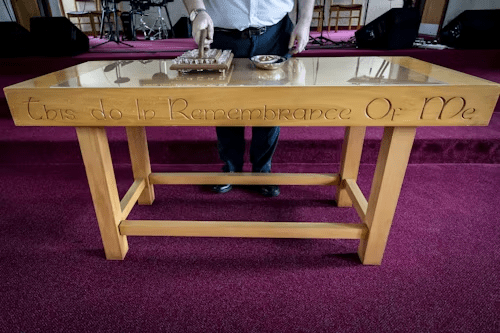
The Communion table at the front of your sanctuary makes a statement every Sunday, before a single word is spoken. It communicates the theology and identity of your congregation, built around this sacred practice, so you need to get the style right. Get it right and the table integrates into the room the way good design should. Get it wrong, and it creates a visual tension your congregation feels. The decision between traditional and modern altar design reflects genuine theological convictions. It also reflects the worship culture your congregation has cultivated over the years of gathering together. AllCommunion.com offers this guide to help you choose. Traditional design concepts The visual language of permanence Traditional Communion tables carry carved panel details and finish tones like dark walnut or deep cherry that communicate permanence and rootedness. These design choices developed over centuries of church furniture tradition that understood wood craftsmanship as an act of reverence. A traditional Communion table in a historic sanctuary with original woodwork and stained glass speaks the same visual language as the room around it. The table belongs there. It looks as though it was made for that specific space. Altar styles in the traditional category all carry inscriptions more naturally than contemporary pieces. Carved lettering and hand-lettered inscriptions integrate with traditional woodwork in ways that feel very organic. Where traditional design struggles A traditional Communion table placed in a contemporary sanctuary creates visual conflict that no amount of styling can recover. With too many details and dark finish tones, the table draws attention to itself, but not the right kind of attention. Traditional pieces are also costly in most markets because the craftsmanship to produce them is more labor-intensive. A congregation whose worship culture is thoroughly contemporary, paying a premium for a traditional design serves neither their aesthetic nor their budget well. Modern design concepts Simplicity as theological intention A modern altar design communicates that the elements on the table carry the symbolic weight, not the surface supporting them. Minimal ornamentation and natural wood tones with precise proportions direct attention toward the bread and the cup. Not the table itself. Altar styles in the contemporary category often come with floating designs and wood types like white oak or walnut in clear or lightly tinted finishes that complement the projected background, without competing with screen content. In a room designed around visual media and contemporary architectural elements, a modern Communion table integrates perfectly well. The risk of trend-driven purchasing Contemporary altar styles carry a risk. They can date. A design that feels current this year may read as outdated in a few years. A congregation purchasing a modern altar will need to evaluate whether the design reflects a genuinely timeless contemporary aesthetic, or if it is a trend-specific moment that will start to feel out of place soon. Brand authenticity matters here in a very practical sense. A supplier like AllCommunion.com, whose contemporary designs are built around enduring proportions and quality materials, produces pieces that hold up aesthetically over time. Transitional designs When neither extreme fits Many congregations sit genuinely between traditional and contemporary worship cultures. A strictly traditional or strictly contemporary Communion table serves part of that community and creates friction with the rest. Transitional altar styles are well suited here. These offer simple profiles without the stark minimalism of fully contemporary pieces, and classic proportions without the ornate detailing of traditional ones. A transitional table in white oak with clean panel detail and a medium-tone natural finish coordinates with the broadest range of existing sanctuary furniture and reads as appropriate to the widest range of congregation cultures. Matching style to your specific worship environment Read your architecture first Walk your sanctuary and identify the dominant architectural language. Your Communion table needs to coordinate with that language. A sanctuary with exposed timber beams and natural stone calls for a table with organic warmth. A sanctuary with white drywall and polished concrete floors calls for a table with precision and restraint. Brand storytelling and supplier transparency Brand storytelling in the church furniture market sometimes substitutes aspirational photography for honest specification. A supplier who photographs a contemporary table in a beautifully lit studio creates an impression that may not survive contact with your specific sanctuary lighting or existing furniture. An authentic brand in the liturgical furniture space, like AllCommunion.com will show you honest photographs of their pieces in real church environments, and also provides references from congregations whose sanctuary environments resemble yours. The questions that lead to the right decision Who is the table for? Brand authenticity in your own decision-making process means answering this question very honestly. The Communion table you choose serves your congregation. So you will need to choose a style that serves the specific people in that specific room.A congregation of mostly older members in a traditional sanctuary is going to benefit from a table that honors the worship culture. A congregation of young adults in a renovated space benefits from a table that speaks their aesthetic language. Both of these decisions reflect the genuine pastoral care for the community being served. Evaluate longevity alongside style Every alter style decision carries a longevity dimension. A traditional Communion table in quality hardwood, built to commercial specs, serves a congregation for decades to come. A contemporary table built from trend-specific materials and finishes may need replacement sooner than that. Factor the lifespan difference into your cost evaluation. AllCommunion.com knows your Communion table holds the most theologically significant elements your congregation handles in worship. The style you choose for it needs to reflect honest discernment about your congregation’s identity and the worship culture God has cultivated in your specific community. Traditional or modern, or something in between. The right answer is the one chosen with that kind of intentionality.
Multi-Purpose Communion Tables: Smart Solutions for Small Spaces

Small congregations often need to carry a full ministry load in buildings that were never designed to carry it. It’s becoming more common every day. The same room that hosts Sunday morning worship becomes something else during the week. So every piece of furniture in that building needs to earn its space to avoid clutter. Pieces that serve only one purpose become liabilities in a space where every square foot matters. The Communion table sits right at the intersection of this challenge between visual focus and occupying platform space that may need to be reclaimed for other purposes between services. Multi-purpose design addresses that tension. Here’s how it helps. The real space problem in small sanctuaries When the platform has to do everything A congregation worshipping in a sanctuary under 3,000 square feet faces platform constraints that will never be an issue with larger sanctuaries. The platform is there to serve as a preaching space, but it needs to do other things too. A large, fixed Communion table consuming the center of that platform is going to create genuine operational challenges every time the room needs to be reconfigured. Small church furniture that is easily moved gives your facilities team the maximum flexibility a multi-use building needs without requiring a second, lesser table for non-worship functions. The same table that holds Communion elements on Sunday morning rolls to a storage position on Saturday afternoon without a second thought. The perception problem worth addressing Some congregations resist multi-functional furniture for their small altar space. The main reason? They feel it to be a compromise of the table’s sacred function. That concern reflects genuine seriousness, and it deserves a serious response. The table’s sanctity comes from what it holds and what it represents, not from its physical weight or immobility. A Communion table that serves its congregation faithfully across a full week of ministry activity, then holds the bread and cup on Sunday morning with the same dignity as a fixed piece, honors its purpose. Small church furniture carefully chosen does not need an apology; just good design and honest use. What multi-purpose actually looks like in practice Casters and mobility A Communion table mounted on locking casters rolls into position for Sunday morning service and locks securely during worship. After the benediction, it rolls to a storage position along a wall or into an adjacent room. This way, you reclaim the platform for what comes next. For a small sanctuary setup, the mobility afforded by a caster-mounted table changes what the building can accomplish throughout the week. Smaller dimensions and tablecloths Smaller does not mean less important or less impactful. Measure the space you have to work with -certainty about the space allows for smart Communion station arrangements. Table covers do a magnificent job dressing up the table for other uses between services. Space constraints don’t limit Presence. These ideas for the Lord’s Table offer the right engineering requirements, but always make sure to evaluate your sanctuary before purchasing. Materials and finish for multi-purpose tables Durability under movement A Communion table that moves regularly is going to accumulate wear at its contact points. Small church furniture specified for multi-purpose use needs heavier finish protection at those contact points and hardware built for repeated mechanical cycling rather than one-time installation. A solid wood altar table on a multi-purpose base is able to handle this wear cycle better than other alternatives. Church table cost comparison for multi-purpose options A church table cost comparison between standard fixed Communion tables and multi-purpose alternatives typically shows a modest premium for the mobility hardware. You will need to evaluate that premium against the cost of a second table for non-worship functions, along with the cost of a storage solution for a fixed table during room reconfigurations. The church table cost comparison often resolves in favor of multi-purpose options when those factors enter the calculation honestly. Small sanctuary setup design principles Keep the table visible A multi-purpose table that rolls to a secondary position during certain services or events needs to have a clear primary deployment position that your congregation recognizes immediately as the Communion table’s home. Small church altar placement in a small sanctuary needs to prioritize the congregation’s sightline from every seat position. High-end church furniture is not off the table for small congregations Some smaller congregations might think that quality church furniture is only for larger ministry budgets, and that assumption costs small churches real money. High-end church furniture built to commercial specifications carries material quality and finish standards that serve a small congregation’s small sanctuary setup faithfully, as they serve a large one. A small church altar built from quality materials and finished with commercial standards is going to serve your congregation faithfully for a generation. A shortlist worth considering Maple Communion Table with Walnut Stain This one from AllCommunion.com offers maple hardwood construction. The walnut stain brings warmth and depth that coordinates naturally with a wide range of existing sanctuary furniture. “In Remembrance of Me” engraved across the front establishes the table’s theological identity visually before the service begins. For a small sanctuary setup that needs a quality hardwood piece, this one ticks all the right boxes for you. Some assembly is needed to keep the shipping cost manageable for congregations working with a modest small church furniture budget. Oak Finish Communion Table The arched design detail on this table’s front apron gives it a traditional character that is perfect for formal or semi-formal sanctuary environments. The oak finish coordinates with the broadest range of existing wood tones in sanctuary furniture. This also has the inscription on the front. For a small church altar position in a traditional or transitional sanctuary, this table anchors the platform with the visual weight a Communion table needs without overwhelming the compact space. Acrylic Communion Table with Last Supper Image Also from AllCommunion.com. This contemporary table is a half inch acrylic construction at 30 inches in height, giving this table a visual character that is not
DIY Communion Table vs Buying Ready-Made: Pros & Cons
Every church is eventually going to face this decision. The communion table sits at the front, visible every week, carrying meaning far beyond wood and design. It reminds the church of Christ’s finished work and the unity shared in Him. So the question becomes really practical. Should a church build its own table or get one that’s already made? This conversation around DIY Communion table pros and cons goes on much deeper than cost. It touches identity and how a church chooses to present something that holds spiritual weight. Why the Communion table matters in the first place The Lord’s Table reflects simplicity in many churches. It points to what Christ has already done. At the same time, it still shapes the room. It becomes part of the visual story every week and quietly forms a focal point that people return to again and again. These are the reasons that the decision between building and buying will need careful consideration. The case for a DIY Communion table Some churches choose to build their own table. This often begins with a desire to steward resources wisely or to create something that reflects the church’s character. A DIY Communion table allows full control over the design. You get to decide the size and the wood type. You even get to decide the inscriptions. That freedom helps the table match the rest of the space without compromise. Many churches also involve members in the process. Skilled volunteers step in, and the project becomes part of the life of the church. That kind of work connects people in a meaningful way. This approach often fits well within broader DIY church furniture efforts, especially if there are professional carpenters and wood-workers in the congregation. Strengths of DIY The first advantage: This shows up in the cost. Materials usually cost less than finished furniture, especially when volunteers provide labor. The second advantage: It comes in the form of flexibility. A church is able to adjust dimensions to fit its exact layout. This matters in spaces where standard sizes do not work well. The third advantage: This involves identity. A handmade table often carries a story. People remember who built it and why. These benefits shape one side of the DIY Communion table pros/cons discussion. Challenges of DIY Building furniture needs skill; the final result will lack stability or finish quality without experience. Time is also another important factor here. A project can stretch longer than expected. This is especially true when volunteers are balancing other responsibilities. Durability raises another concern here. Poor construction leads to structural issues over time. Even the smallest details matter: uneven legs or rough edges can distract from the purpose of the table. These challenges often appear in DIY church furniture projects when planning falls short. The case for buying ready-made Some churches choose to buy a finished Communion table as this path removes uncertainty and often brings immediate results. Suppliers like AllCommunion.com offer tables with maximum durability in mind. Many of these tables use hardwood like oak or maple and apply finishes that resist wear. This approach provides consistency. The table comes ready to use with a proper finish and structural strength already in place. Strengths of ready-made tables The first advantage: It shows up in reliability. A professionally built table stands firm and holds up quite well under years of use. The second advantage: It involves design quality. You get clean lines and smooth finishes that help the table sit naturally within the space. The third benefit: It comes from time. Churches can place the table immediately without waiting for construction to finish. These points strengthen the buying side of the Communion table pros/cons discussion. Challenges of ready-made tables Cost remains the biggest barrier here because high-quality tables will need a larger upfront investment. Customization might also feel limited. While many suppliers will offer you options, you might not find an exact match for your space or vision. Shipping and delivery timelines also can delay installation. Still, many churches accept these trade-offs because of the consistency they receive. Design and aesthetic impact The table needs to work with the room and not feel out of place or disconnected from the rest of the space. A thoughtful altar table styling approach is going to help keep things aligned. Handmade tables sometimes are going to struggle here if the material or finishes do not match the existing elements. On the other hand, a well-built DIY Communion table can blend perfectly when planned and executed well. A strong visual connection supports the entire space and keeps the attention centered. Long term perspective Churches do not replace Communion tables often and the decision is going to last you for many years. A well built table (handmade or purchased) needs to continue to serve without constant repair. Durability becomes the key factor here. Ready-made tables often hold an advantage thanks to professional construction methods. Still, a carefully built DIY Communion table can reach the same level when skilled hands guide the process. Long-term thinking is going to help your church avoid repeated expenses and unnecessary replacements. Bringing the decision together The choice between buying and building depends on your church’s situation. A church with skilled members and time may find value in creating a DIY Communion table. The process itself can strengthen the community, and also produce something very meaningful. A church that needs consistency and speed will benefit from buying a finished table, as the result arrives ready and dependable. Both of these paths hold value. The key lies in honest evaluation. The full picture of communion table pros and cons becomes clear when churches consider skill and budget, along with long term use. Final thought The Communion table points to Christ and the unity of His people. It needs to serve faithfully. A well-chosen table supports that purpose without distraction. The table becomes a part of the worship space in a quiet, steady way. It does it through thoughtful altar table
How Communion Table Placement Affects Church Aesthetics
The moment someone walks into the church, they look for what matters most. The Communion table carries deep meaning;it reminds believers of the finished work of Christ and the shared life we have in Him. Where that table sits in the sanctuary shapes how people absorb that truth. The altar table position does more than fill space, as it quietly defines the focus of worship and the overall feel of the church. Why placement shapes what people notice People naturally look toward a center point in a sanctuary; often the pulpit is there and draws attention. For that very reason many churches have their Communion table nearby; when the Communion table stands clearly visible, it helps form a strong church focal point. It also reminds the congregation that worship centers in Christ and what He has done. Churches throughout history have used the table this way, as a visual reminder of shared faith and fellowship. When the table disappears into the background, people stop noticing it. Over time, that absence affects how often they think about Communion itself, even when the church values it deeply. A thoughtful altar table position brings that meaning back into focus. A clear visual anchor Many churches place the Communion table at the center of the stage. This approach creates immediate clarity. People walk in and understand where to look. A central placement strengthens the church decor layout because it aligns every other element around one clear anchor. The pulpit and the lighting begin to support that center. Research on church design shows that when the table becomes visible and central, it reinforces the shared identity of the congregation as one body gathered together. A well-planned church stage setup uses this placement to create balance. Nothing feels out of place because everything flows towards the same point. When the table feels too far away Some churches place the Communion table far back on the stage. Or even raise it above the congregation. But this is what creates distance. That distance affects how people end up experiencing the moment. The connection weakens when the table is too far away. This is when people start to feel like observers and not participants. A better altar table position keeps the table within reach. Both visually and physically. People need to feel close enough to engage. Side placement Modern churches often use flexible stages with bands and screens. These shift week to week. In these settings, the table sometimes moves to the side. This approach supports flexibility but there are some genuine trade-offs. Side placement can reduce the visual strength of the table. A strong church decor layout still finds ways to highlight the table even when it sits off-center. Lighting and intentional spacing can draw the attention back to it. Without the effort, the table fades into the background. A thoughtful church stage setup ensures that flexibility does not remove meaning. Table design and styling work together The way the table looks also shapes the experience. Simple, clean designs often work well as they reflect the truth that Christ’s sacrifice stands complete. It is the table that points back to that finished work. Intentional altar table styling uses cloths and Scripture engravings to reinforce that meaning. These elements are not meant to distract but to guide attention. The message becomes clear without any extra words when placement and styling work together. Height and visibility A table that sits too low disappears behind other elements. A table that sits too high can feel distant or formal. Church design often recommends keeping the table at a natural human height. Good proportions are what strengthen the entire church decor layout. The table must not overpower the space, but it should not vanish either. Visibility matters from every seat. A strong altar table position ensures that no one feels cut off from what is happening. Aligning the table with the Word Churches often center worship around the Word of God. The pulpit and the table work together. The message becomes clear when both elements align. The Word is preached, and the table reminds believers of what Christ has done. A balanced church stage setup places these elements in relationship. They need to feel connected. Some churches place the table directly in front of the pulpit. Others place it slightly forward. Both of these approaches can work when they are able to maintain visual unity. Movement and accessibility Placement also is going to affect how people move during Communion. If the table sits in a crowded space, people will struggle to approach. Too far away, and the movement becomes slow and disconnected. Church design often recommends leaving open space around the table so people can gather and participate easily. A thoughtful altar table position will allow natural movement. This creates a smoother experience during the Communion observance and keeps the focus on the worship. Practical worship setup ideas Churches approach layout differently based on size and available space. Still, a few worship setup ideas continue to serve well: Keep the table visible from every seat. Align it with the main teaching area. Avoid clutter near and around the table. Use lighting to highlight it during communion. Allow space for people to approach comfortably. Bringing it all together The Communion table carries more than bread and cup; it points to the work of Christ and the unity of His people. The altar table position shapes how clearly that message comes across. A strong placement will create focus. A weak placement will create a distraction. When churches give attention to church stage setup, church decor layout, and intentional altar table styling, they build a space that supports worship without drawing attention to itself. The goal stays super simple. Help people see clearly. Help them remember what Christ has done. Let the space serve that purpose quietly and faithfully.
Best Communion Wafers for Churches Today

Communion is one of those moments in a Sunday service where everything else just fades. The music quiets, and what remains is just the church, together, remembering what Jesus did on the cross for us. The bread and juice we hold carries weight far beyond their size. Yet week after week, church staff make rushed decisions about Communion wafer suppliers, ordering whatever’s available or sticking with a vendor out of habit. Today, we have more options out there than ever before, so when you buy Communion wafers online, there’s absolutely no reason to settle. The right wafer for your church is available without a lot of trial and error. We at AllCommunion offer this guide to cut through all of that online noise and give you a straight look at what’s available online and what actually matters for your church when choosing, so stick with us till the end. What matters when choosing Communion wafers Before jumping into the top products we found, let’s talk about what separates a good Communion wafer from one that creates problems at the table. Freshness and shelf life Communion wafers ordered online often sit in storage before use. A one-year shelf life from the manufacturing date is considered ideal and will give your church maximum flexibility without compromising quality. Always check the date before purchase. Inclusivity Your congregation includes people with gluten sensitivities and other dietary restrictions. The best wafers for Communion use don’t exclude anyone at the table. Stocking both standard and gluten-free Communion wafers is not optional for a congregation serious about welcoming every member to the Lord’s Table. Consistency Wafers that crumble mid-distribution create a distraction. Sealed edges and proper packaging keep the wafer -and the observance- intact. Quality and packaging No matter if your church is serving 50 or 500, Communion wafers bulk ordering will save you money. Plus, it makes sure you’re never short on supply for a high-attendance Sunday. We recommend reusable, crush-proof packaging to protect your supply between services. Quick picks for the best wafers Christian Wolf Communion Bread and Wafers Here is a straightforward, reliable product that works for a wide range of congregations. Baked fresh in a US bakery, these Communion wafers come in 1/2″ square pieces, packed in a resealable bag. Its dual offering helps it stand out and top the list: you can order both unleavened and gluten free Communion wafers under the same brand, so ordering becomes very simple. These bread pieces offer a one-year shelf life from the manufacturing date to give your church room to order in volume without waste. For churches needing Communion wafers, bulk purchasing from AllCommunion.com provide consistency without overcomplication. Ener-G Foods Gluten-Free Communion Wafers Another fine choice on AllCommunion.com is Ener-G Foods’ gluten free Communion wafers. These best wafers for Eucharist use are free from gluten, wheat, soy, and several other common allergens. Each box provides 40 wafers at 1 1/4″ in diameter with a full one-year shelf life. For churches that want every single person at the table to participate fully, these Communion wafers online are a practical and thoughtful addition to your Communion supplies. Order them alongside your standard wafers and make inclusion the default. Gluten-Free Communion Wafers – Individually Wrapped This product takes that allergen conversation a step further. The gluten content sits at just 6 parts per million. That is well below the 20 parts per million threshold that qualifies as gluten-free. That precision matters for congregation members with serious sensitivities. The baking process happens in a dedicated facility using positive air pressure to keep the environment free from contaminants. The equipment never touches the standard altar bread production. Each box gets you 25 individually wrapped wafers, which prevents cross-contamination both in transit and during storage. For churches that take premium Communion wafers seriously, this product brings a level of care that goes much beyond labeling. The one-year shelf life holds, and the individual wrapping keeps every wafer in the same condition it left the bakery. Oven-Baked Communion Bread – 500 Pieces Sometimes all a congregation needs is volume and simplicity in one package. This Communion wafers bulk buying option provides all three. Since these are made from wheat flour and vegetable shortening, these oven-baked pieces carry a soft texture that distributes cleanly through a congregation. The 500-piece count makes this a strong option for mid-to-large churches managing high-attendance Sundays or special services like Easter and Christmas. As bulk Communion wafer options go, this one keeps the focus exactly where it belongs -in the moment. Priest-Celebrant’s Hosts – 2 3/4″ – Cavanagh Breads (Box of 50) Cavanagh is a name that keeps coming up; every time worship leaders talk about high-quality Communion wafers, the reputation is well earned. These wafers are manufactured without human hands touching the product. This process detail speaks to both sanitary practice and care. The sealed edges prevent crumbling. This is very important during distribution in larger congregations. Available in white and whole wheat, in multiple diameter sizes. Packaged in boxes of 1,000 for congregation use, with celebrant’s hosts boxed separately in 50s. First-time buyers can opt for the canister format that provides a crush-proof, resealable container for long-term storage. As top rated Communion wafers go, Cavanaugh’s offering through AllCommunion.com is the standard against which others tend to be measured. The one-year shelf life and rubrically correct preparation make these Communion supplies online a reliable staple for any church. Stock your table right The Communion table is not a place for last-minute decisions, so ordering your Communion wafers in bulk supply early, and knowing your congregation’s needs will help you pick consistent options. These are the practical acts of a church that takes worship seriously. Every wafer placed in a congregant’s hand is part of something much larger than a Sunday routine. So stock your table accordingly.
Step by Step Guide to Serving Communion Outside the Church

It is no secret that believers often will encounter times when they’re unable to attend a Sunday service in person. This can be due to illness, family emergencies, travel, work, missions and so much more. Any of these can separate people from their regular congregation on a given Sunday morning. In those moments, pastors still want to minister to people. They want to faithfully encourage believers who cannot attend Sunday worship. Scripture describes the Church’s early history, what worship together looked like. It shows believers gathered in many places; most often in homes. Here they shared meals and prayed together. They also broke bread in remembrance of Jesus. So you see the power of Communion was never dependent on location. The focal point of Communion has always been on Christ. For that precise reason many pastors and ministry leaders now guide believers in serving Communion outside the church when circumstances demand it. Proper preparation and reverence is what you need to celebrate what Christ has done beyond the walls of the sanctuary as well as inside it. We at All Communion bring you this guide that walks you through the full process, step by step so you are able to approach the moment with clarity and care. Why Communion can be served beyond the church building The New Testament shows believers gathering wherever they could meet. In the book of Acts, followers of Christ shared teaching, fellowship, prayer, and the breaking of bread inside homes. Their identity as the body of Christ did not depend on a physical church building. Communion exists as a reminder of Jesus’ sacrifice, to proclaim His death and resurrection until He returns. The bread reminds us of His body given for us. The cup reminds us of the new covenant established through His blood. So all you are going to need is sincere faith and the elements and you can celebrate that truth in many settings. Pastors often guide serving Communion outside church in places such as: Hospital visits Home gatherings Small group meetings Mission fields Homes of elderly believers who cannot travel Each moment is going to carry deep pastoral significance. The Lord’s Supper strengthens faith. It also reminds believers that Christ remains present with His people, no matter where they are. Complete guide to serving Communion outside the church Step 1: Prepare the Communion elements Preparation is perhaps the only way to protect the meaning of the moment. Leaders need to prepare the bread and the cup ahead of time, ensuring the sacrament remains focused. Many ministries now keep a portable Communion kit ready for pastoral visits and outreach. So what do these kits have inside them? Basically small cups with juice and wafers/bread. Some might even come with small serving trays. Reliable Communion supplies from AllCommunion.com help leaders maintain consistency for any Communion observance, thereby avoiding any confusion or unnecessary interruptions with everything organized and handy. Some even prefer specialized portable Communion sets. These are specifically designed to travel so they have a very compact form. These compact sets allow ministers to serve believers in any place without difficulty. Step 2: Gather believers with intention The next step would be believers coming together for the sacrament. Communion brings believers together in remembrance of Christ. Whether it’s in a member’s home because they cannot travel, or with a hospital patient who has requested Communion, Jesus promised where two or more are gathered, He is there with them. This gathering together can absolutely take place beyond the four walls of the church; the location matters far less than the heart posture of the believers present there. A brief moment of teaching helps everyone focus on Christ. Many pastors read from passages of 1 Corinthians 11 or the Gospel accounts of the Last Supper to remind believers why they gather and to remind them of what the bread and cup represent. Step 3: Encourage personal reflection Now before you distribute the elements, Scripture calls believers to examine their hearts. This is to invite honesty before God. Participants take a quiet moment to pray. Also thank God for the sacrifice of Jesus and ask for forgiveness of any unconfessed sin. This reflection will prepare the heart and remind believers that Communion celebrates the grace in Christ that is available to us. Leaders who observe Communion beyond church services often gently guide participants to this reflection. A short prayer or moment of silence is all it takes for believers to fully focus on Christ. Step 4: Distribute the bread After prayer and reflection, the leader distributes the bread. The bread represents the body of Jesus given for us. And so believers receive it with gratitude and remember the sacrifice. For this moment, many pastors keep a Communion kit ready. The advantage with these kits are the pre-prepared portions of juice and wafers. This makes distributing the elements easier. Church leaders serving in homes or small groups appreciate how easy these kits are to use. A well-prepared Communion kit ensures that the focus is fixed on worship. Once distributed, the leader invites the group to partake together. Step 5: Share the cup After the bread, it’s time for the cup. The leader distributes it. The cup is a representation of the new covenant established through the blood of Christ. Jesus shed His blood so believers could receive forgiveness and new life. Some ministries even have additional Communion supplies at hand just to take care of this part. Individual cups or prefilled containers make the entire process quite seamless. Traveling frequently? Ordering a Communion kit online can be the best bet because these kits come with all the things you need. After everyone receives the cup, the group then drinks together. Step 6: Offer a prayer of gratitude Communion will always lead believers back to gratitude. After the bread and cup, it is time to close with prayer. This moment allows the group to thank God for the sacrifice of Jesus. For the unity shared among
Choosing the Right Chalice for Communion Services

A chalice is not just a cup placed on the Communion table; there is meaning behind it. The bread and the cup point hearts back to the moment Christ offered Himself for us. So every detail matters, along with this important vessel used during Communion. Choosing a chalice deserves thoughtful consideration. Churches keep their chalices for generations, requiring a well-crafted durable chalice to serve a congregation faithfully through countless worship services. Choosing the best chalice matters; not just for the visual appeal, either. Materials, balance, craftsmanship, and long term care matters, too. When all of these features come together, the result is a long lasting chalice that will support observances of Communion year after year. Why durability matters for a chalice A church’s instruments of worship are used regularly, especially the ones that serve the Lord’s Table. Pastors lift chalices during prayers. Servers carry them across the sanctuary. The chalice returns to the table week after week. In case it is a poorly made one, signs of wear show up quickly. Thin metal bends. Lightweight designs tip easily. Decorative finishes fade. Overlooking durability? You will have to replace the vessel far sooner than you planned. Pick a durable chalice to avoid problems. When you opt for skilled craftsmanship, you get a vessel that is steady in the hand and on the table, with strong materials that resist corrosion and wear from repeated use. When a church chooses carefully, the chalice becomes a faithful part of worship for many years. Here’s how to choose one. Choosing a durable chalice for your church Start with the purpose Before everything else, you need to consider how the vessel will be used to serve the congregation. Every chalice for church gatherings must be able to support the moment of Communion; after all, that’s the main goal. A regularly used chalice in front of a large congregation needs to feel secure when lifted and held comfortably during prayer and distribution. It also needs to be firm so that there is no risk of tipping. Understand what you need. The next steps are solely dependent on this step. Pick the right materials Next comes the choice of materials. This is what will determine how long a chalice will last. The wine or juice used during communion contains natural acids and over time those acids will interact with certain materials. If you make a wrong choice here, it will lead to discoloration. Higher quality materials have an edge with long lasting chalices. Silver remains the top choice. Many will even line the interior with gold plating. A durable chalice should never have to rely on soft alloys or decorative metals that react easily with liquid. Durable materials preserve the beauty and integrity of the vessel. The balance and structure Many church leaders initially notice the design of a chalice. You have things like engravings and patterns that can be very attractive. Yet structure has a far more important role to play. A well designed chalice for church services maintains a strong balance between the cup and the base. When the pastor lifts the vessel during prayers, the weight needs to feel centered. So also, the base will require careful design. A wide and stable base prevents tipping during worship. Narrow bases might look elegant at first, but are not great on the stability front. Next comes the stem which needs to be absolutely comfortable to grip. Many historic chalice designs include a small raised section in the stem that naturally guides the hand into position. That detail improves control. Making the right structural choices will provide a long lasting chalice capable of serving a congregation safely and confidently. Look for meaningful craftsmanship The chalice sits at the center of a very powerful moment in worship. And for that very reason, many churches choose designs to reflect the story of Christ. Often chalices have engravings with biblical symbols. Some chalices feature crosses or grapevine patterns. These remind believers of the words of Jesus about the vine and the branches. Others display traditional Christian symbols that point toward the gospel. Thoughtful craftsmanship elevates your experience of Communion. A stunningly designed Holy Communion chalice draws attention like none other, towards the meaning behind the Lord’s Table. If you are choosing to go with engravings, make sure that these remain deep enough to endure polishing and cleaning over time because fine details fade very quickly if these are carved too shallowly into the metal. A durable chalice is going to be the perfect balance of beauty and strength. Skilled artisans know how to make that happen. Stability during the moments of worship We will rarely think about stability. We only start to think about it when something goes wrong; but that’s the hard way to do things. If you have a poorly made chalice or one that tips, it interrupts the flow of the worship service.Isn’t it easier to just purchase a stable chalice in the first place? You need a chalice with a wide base that remains stable enough to support the cup. Follow a simple rule of thumb to never go wrong: The base needs to measure more than half the width of the cup. When you have this ratio, the balance is maintained. The stem also plays a role in stability. Smooth cylindrical stems sometimes slip in your hand. A slight contour or a raised ring in the stem is helpful to securely grip the vessel when lifting it. These are the small design choices that transform a decorative object into a practical chalice for church services. When a church invests in the right chalice A well-made Communion chalice is going to eventually become part of your church’s story. Generations of believers see it during the Lord’s Table as pastors lift it during the prayer. The congregation remembers the sacrifice of Christ. The chalice quietly witnesses years of worship and prayer among believers who gather to celebrate what Jesus has done. Choosing a durable chalice thus becomes